Nicotine salt shot: dosage and how to use it
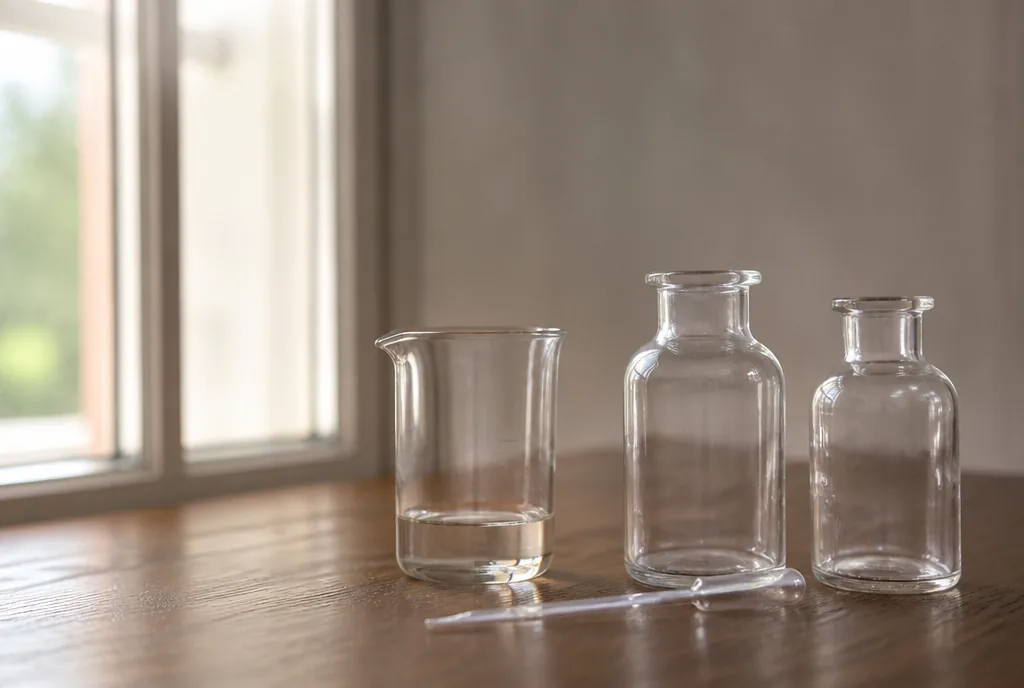
The shortfill is open, the little 10 ml bottle is waiting beside it, and the question always arrives at the same moment: how much, and in which order. Getting it wrong cannot be undone, since you would have to take nicotine back out of a blend it is already dissolved in. One piece of arithmetic avoids that waste, and a nicotine salt shot obeys it whatever the volume.
The calculation behind a nicotine salt shot: 20 times the volume poured, divided by the total
A nicotine salt shot sold in the United Kingdom is almost always 20 mg/ml in a 10 ml bottle, that being the ceiling the law allows. Multiply 20 by the number of millilitres you pour, then divide by the final volume of the mix.
A whole 10 ml shot therefore carries 200 mg of nicotine. Poured into 50 ml of nicotine free liquid it makes 60 ml in total, which is 3.33 mg/ml.
Two shots into 40 ml of liquid give 60 ml at 6.66 mg/ml. The volume of the shot always counts towards the total, and that is exactly why British shortfills arrive as 60 ml bottles filled to 50.
What separates it from a freebase nicotine shot
The two products are dosed the same way and respect the same ceilings. The difference lies in the chemical form of the nicotine and in what that changes in the mouth.
In a salt shot, the nicotine is combined with an organic acid, benzoic or lactic depending on the manufacturer. That pairing lowers the pH of the preparation.
The direct and easily verified consequence is that, at equal strength, the sensation at the back of the throat is noticeably softer than with freebase nicotine. British listings describe the same shot as producing practically no throat hit, which is what allows higher stated strengths without marked irritation.
Most salt shots are also formulated at 50/50. That ratio makes them compatible with pods and tight draws, which is their natural territory. Adding a 50/50 shot to a 30/70 shortfill nudges the final glycerine share down, though across 60 ml the shift stays under three points, so it is negligible in practice. Our note on the 70/30 ratio explains why that direction of travel matters at all.
Dosing a shortfill with a nicotine salt shot
Shortfills are designed to take one or two shots, but the headroom left in the bottle decides what is actually possible. Check it before you open anything.
The standard case is 50 ml sitting in a 60 ml bottle, by far the most common packaging. The empty space corresponds exactly to a 10 ml shot and brings the mix to 3.33 mg/ml.
To land on a higher strength you need either a 70 ml bottle or to remove 10 ml of the shortfill before adding a second shot. The second method holds the strength you were aiming for but reduces the final volume.
Other volumes follow the same logic. A 30 ml shortfill in a 40 ml bottle takes one shot and lands at 5 mg/ml. A 100 ml shortfill in a 120 ml bottle takes two and returns 3.33 mg/ml, the same value as the standard case.
Keep this reference point in mind: as long as the shot represents one sixth of the final volume, the result stays at 3.33 mg/ml whatever the format. Some British calculators also work backwards, pouring a partial shot to hit a lower figure, which is where a graduated syringe earns its place.
The mistakes that make the number wrong
The calculation is simple, but three routine handling errors falsify it. All three are corrected before anything is poured.
Pouring into a bottle that is already full is the first. If the shortfill is filled to the brim, adding a shot forces you to remove liquid and the stated strength no longer means anything. Decant into a larger graduated bottle first.
Confusing the target strength with the strength of the shot is the second. A bottle showing 20 mg/ml is never the strength of the finished mix, and that confusion leads people to open extra bottles to reach a value they passed several millilitres ago.
Neglecting to homogenise is the third. A shot poured and left alone gives an uneven liquid, heavily loaded at the bottom of the bottle. Close it, turn it over a dozen times, then let it stand for a few minutes before filling a tank.
Handle every shot as you would any concentrated ingredient: gloves on, out of reach of children and pets, on a surface that wipes clean, and store the bottles away from direct light.
Matching hardware to a nicotine salt shot
The device you pour into is far from neutral, and it governs comfort as much as the strength you settle on. The same preparation does not behave identically on two different coils.
Salts are used on low power, tight draw setups with coils above 1 ohm. Compact pods are their natural home, and the whole shortfill and shot system was built around those numbers.
On a high power sub ohm build, a high salt strength very quickly becomes excessive. The practical rule is to lower the strength as the wattage rises, and the reverse.
One field observation completes that rule. On identical hardware, moving from freebase nicotine to salts generally lets you keep the same stated figure with a softer sensation in the throat. That is not a dosage equivalence, simply a difference in perception, and it is worth testing on a small volume before committing a whole bottle.
The limits the regulations set
The British framework explains every format on the shelf. Knowing it saves you hunting for products that cannot legally exist here.
The Tobacco and Related Products Regulations 2016 provide that nicotine containing liquid may only be placed on the market in refill containers of no more than 10 ml, and may not exceed 20 milligrams of nicotine per millilitre. The same rules cap tanks and cartridges at 2 ml and prohibit sale to anyone under 18.
That double ceiling is where the whole system comes from: a large bottle cannot be sold with nicotine in it, hence the separate shot. Anyone assembling their own ingredients from scratch runs into the same limits, which is why a DIY e-liquid kit always supplies its nicotine in the same 10 ml format alongside the base liquid.
Frequently asked questions
Can you mix salts and freebase nicotine?
Nothing technically prevents it, and the total strength adds up using the same formula. The result in the throat becomes hard to anticipate, however, which makes later adjustments awkward.
Does a shot change the flavour of the liquid?
A neutral shot carries very little flavouring and the dilution stays small. Any perceived difference comes mostly from the throat sensation rather than the flavour profile.
How long does an opened shot keep?
Nicotine oxidises on contact with air and browns gradually. A tightly closed bottle kept away from light holds up for several months without notable change.
Does the liquid need steeping after adding a shot?
A few hours are enough for homogeneity. Long steeping concerns flavour development, not nicotine, and adds nothing here.
Do shots below 20 mg/ml exist?
Yes, versions at 18 mg/ml and 10 mg/ml circulate for finer dosing. They simply require a larger poured volume for the same result, so recalculate rather than reusing a familiar figure.
Nicotine salt shot: the one operation to remember
Volume poured multiplied by the strength of the bottle, divided by the total volume. That formula covers every format on the British market and makes the result predictable before you even break the seal.
The rest comes down to the order of the gestures, small bottle into large, and a serious shake afterwards. A nicotine salt shot dosed properly is noticeable precisely because it is not noticeable, and the note you write on the cap is what lets you repeat it next month without thinking.
Editorial content for adult readers only. Vaping products usually contain nicotine, a substance that causes addiction. Not for sale to under-18s in the United Kingdom. This article is not a buying recommendation.
You might also like
Saving money
DIY e-liquid kit: what is really in the box?
What a DIY e-liquid kit actually contains, how to work out its cost per bottle, and the mistakes that spoil a first attempt at home mixing.
01Morgane Trémaux · Lire l'astuce
Quick tips
CBD dosage calculation: the formula that settles it
CBD dosage calculation comes down to one division. The formula, reference figures by bottle size, and the labelling traps on shots sold in mg.
02Morgane Trémaux · Lire l'astuce
Quick tips
CBD shot: mixing it right the first time
A CBD shot goes into a base or a nicotine free shortfill. The exact method, how to work out the final mg/ml, and when the blend refuses to settle.
03Morgane Trémaux · Lire l'astuce