70/30 e-liquid: is it PG or VG first?
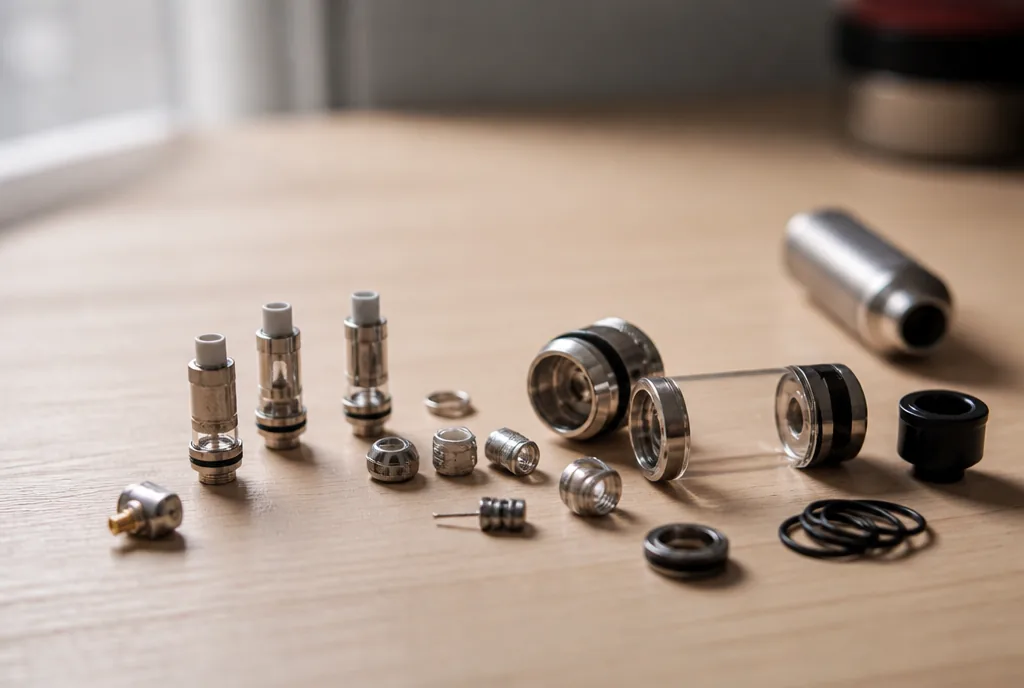
Two bottles carry the same figure, 70/30, yet one fills a small pod perfectly while the other floods it in three puffs. The confusion does not come from the hardware. It comes from the way brands write the ratio down, and nothing on a label forces them to spell out which number belongs to which ingredient.
The reflex on a 70/30 bottle: read the letters, not just the numbers
On any bottle marked 70/30, look for the letters PG and VG printed next to the numbers. The order of the letters gives the order of the percentages, and nothing else does.
A liquid written 70 VG / 30 PG holds 70 percent vegetable glycerine. It is thick, soft on the throat and produces a dense volume of vapour. A liquid written 70 PG / 30 VG holds 70 percent propylene glycol instead, which makes it thin, sharper and far more discreet.
British listings lean heavily towards the first reading. Most UK retailers put VG first as a matter of house style, which is why a shortfill described as 70/30 will almost always be the high glycerine version. The word almost is doing real work in that sentence.
What the 70/30 ratio actually describes
An e-liquid is not a single substance but a blend, and two ingredients account for the overwhelming majority of its volume. The ratio only gives their proportion, and everything else follows from it.
Propylene glycol is thin and carries aroma molecules efficiently. It produces little vapour and gives the crisp sensation at the back of the throat that most vapers recognise straight away.
Its low viscosity helps wicking through narrow feed ports, the kind found on coils rated above 1 ohm. The trade off is that a very thin liquid also finds its way past a tired seal more easily.
Vegetable glycerine is viscous, faintly sweet, and produces a heavy volume. It softens the throat sensation and rounds off flavours, sometimes to the point of blunting the finer notes of a fruit blend.
That viscosity demands wide feed ports. On a narrow mouth to lung coil it reaches the cotton too slowly and produces a burnt taste after a handful of chained puffs.
Settling a 70/30 label in ten seconds
Three quick checks are enough before you buy, and none of them requires opening the bottle. They stack: two matching clues amount to a certainty.
The printed label often runs out of room and settles for the bare numbers. The online product page nearly always spells the composition out in full, because the ingredient statement has to appear somewhere.
Bottle format is the second clue. Large nicotine free bottles, sold here as shortfills, are built for higher power vaping and carry high glycerine figures. The 10 ml ready to vape bottles that UK law caps for nicotine containing liquid mostly serve pods and tight draws, and lean the other way.
The recommended coil is the third. When a brand suggests a coil between 0.15 and 0.6 ohm it is describing sub ohm use, so a glycerine heavy liquid. A recommendation above 1 ohm signals the opposite.
Which coil suits each reading of 70/30
A glycerine dominant 70/30 is aimed at higher power builds, often somewhere between 25 and 80 watts depending on the hardware. It suits dessert and sweet fruit profiles, where volume matters more than fine detail.
It performs badly in a classic mouth to lung pod. Wicking is too slow, the cotton dries out, and you get the exact scenario of the bottle bought by mistake.
The propylene glycol dominant reading is the historic profile of small atomisers and tight draws. It fits pods, mouth to lung tanks and modest wattage, and it renders tobacco, menthol and sharp fruit profiles with precision.
Its main drawback is that some people find a high propylene glycol content drying at the back of the throat. Cutting the share of PG generally settles that, and a look at our guide to choosing a base liquid and its ratios shows which proportions are sold ready mixed.
Working out the ratio of a bottle with no readable label
A decanted bottle, an end of line purchase or a label that has peeled off can leave the question wide open. Two observations give an answer good enough to decide whether the liquid goes into today’s pod.
Put a drop on a smooth surface and tilt it slightly. A drop that runs away quickly indicates a thin liquid, so a high propylene glycol content. A drop that stays put and spreads slowly gives away a glycerine majority.
The test replaces no product sheet and yields no precise percentage. It simply separates the two families, which is enough to avoid a burnt coil.
Colour and clarity help too. At comparable flavouring levels, a very viscous liquid looks slightly denser against the light and leaves thick trails down the inside of the bottle when you turn it over. A thin liquid drops back in one movement without leaving a film.
Converting a 70/30 ratio when you blend two bottles
Combining two liquids of different ratios raises no technical problem, provided you know where you land. The maths works pro rata on volumes.
Multiply the volume of each bottle by its share of propylene glycol, add the two results, then divide by the total volume. Thirty millilitres at 70 percent PG plus 10 ml at 30 percent PG gives 2,100 plus 300, so 2,400 divided by 40, which is 60 percent PG.
The operation mostly serves to rescue a bottle bought in error. A high glycerine liquid diluted into enough thin liquid becomes usable again on mouth to lung hardware, rather than ending its days at the back of a drawer.
Just check that both bottles use the same writing convention before you calculate. Adding a 70/30 read the wrong way round obviously wrecks the whole result.
What the ratio changes for coil upkeep
The ratio you choose is paid for, or paid back, in the lifespan of your consumables. It is the most concrete parameter for anyone trying to stretch the gap between coil changes.
Vegetable glycerine caramelises more readily against the heating wire and leaves a dark deposit on the cotton. The higher the glycerine share, the faster a coil loses definition.
A propylene glycol dominant liquid fouls a coil slowly but disappears faster. Its fluidity encourages seepage around seals and evaporation in a tank left open, so storing hardware upright limits the second effect.
One regulatory point is rarely spelled out. The Tobacco and Related Products Regulations 2016 cap refillable tanks and cartridges at 2 ml in the United Kingdom, on top of the 10 ml limit on nicotine containing bottles and the 20 mg/ml ceiling on strength.
On so small a volume, an overly viscous liquid eats further into the wicking margin available. That is why home mixers building around a nicotine salt shot tend to keep an eye on both numbers at once.
Frequently asked questions
Is there a rule forcing PG to be written first?
No labelling rule sets the order of the two components. Only the ingredient statement itself is regulated, not its sequence, which is exactly why both conventions coexist on the same shelf.
Can I mix two bottles with different ratios?
Yes, the result is a weighted average of the volumes. Mixing a 70/30 and a 50/50 in equal parts gives a 60/40, as long as both bottles use the same writing convention.
Is a 70/30 a sensible choice for a beginner?
In its propylene glycol dominant form, yes, because it matches most entry level kits. In its glycerine dominant form it needs specific hardware and a more technical setup.
Why does my bottle say 70/30 and nothing else?
Some brands treat the notation as self evident in their home market. Customer services or the manufacturer’s technical sheet will settle it in one message.
Does the ratio affect how much liquid I get through?
Yes, indirectly. High power builds paired with glycerine rich liquids empty a tank far faster than a low power pod over the same period of use.
70/30: the check that avoids a wasted bottle
The figure on its own means nothing. The pair of letters next to it decides everything, and reading them takes a second once the habit is there.
Confirm the PG and VG order before you buy and you avoid both an unusable bottle and a coil sacrificed for no reason. Once the convention is identified, 70/30 becomes a reliable reference point for comparing two liquids against each other, and the same reflex carries straight over to a DIY e-liquid kit where you set the ratio yourself.
Editorial content for adult readers only. Vaping products usually contain nicotine, a substance that causes addiction. Not for sale to under-18s in the United Kingdom. This article is not a buying recommendation.
You might also like
Saving money
DIY e-liquid kit: what is really in the box?
What a DIY e-liquid kit actually contains, how to work out its cost per bottle, and the mistakes that spoil a first attempt at home mixing.
01Morgane Trémaux · Lire l'astuce
Quick tips
CBD dosage calculation: the formula that settles it
CBD dosage calculation comes down to one division. The formula, reference figures by bottle size, and the labelling traps on shots sold in mg.
02Morgane Trémaux · Lire l'astuce
Quick tips
CBD shot: mixing it right the first time
A CBD shot goes into a base or a nicotine free shortfill. The exact method, how to work out the final mg/ml, and when the blend refuses to settle.
03Morgane Trémaux · Lire l'astuce